Custom EVA Case vs. Hard Plastic Case: Which is Best for Sensitive Medical Instruments?
Quick Answer: Custom EVA cases provide superior shock absorption, 30%–50% lighter weight, and 70%–80% lower initial mold tooling costs ($500–$1,500) compared to hard plastic cases ($3,000–$10,000+). EVA cases (Shore Hardness 65–75C) excel in portability, customization flexibility, and impact mitigation for portable medical equipment. Injection-molded hard plastic cases offer IP67 waterproofing and extreme crush resistance, making them ideal for heavy-duty military or industrial medical transit.
Common Applications: Medical device OEMs widely specify custom thermoformed EVA cases to protect high-value portable instruments, including insulin delivery pens, semen storage/transport containers, stethoscopes, fingertip pulse oximeters/blood pressure monitors, glucose meters, and diagnostic probes due to their superior lightweight mobility, crush resistance, and drop-proof cushioning that safeguards expensive equipment.
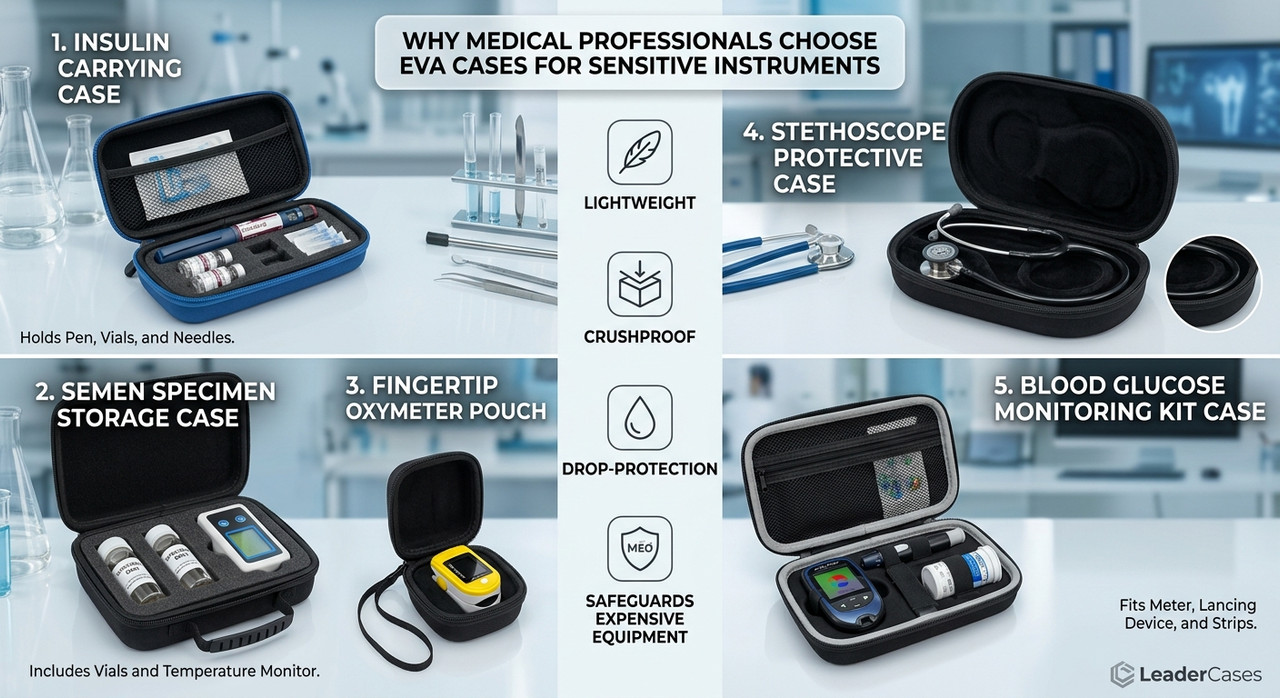
Why medical professionals choose lightweight, crushproof custom EVA cases for sensitive instruments like insulin pens, stethoscopes, and oximeters.
When engineering protective packaging for sensitive medical instruments, medical device manufacturers (OEMs/ODMs) face a crucial engineering decision: Custom EVA (Ethylene-Vinyl Acetate) cases vs. traditional injection-molded hard plastic cases. Selecting the wrong housing material can lead to high shock transmission, instrument recalibration failures during transit, or excessive upfront tooling expenses.
What is the Difference Between Custom EVA Cases and Hard Plastic Cases for Medical Devices?
The core difference lies in structural rigidity, energy dissipation, and mold production costs. Custom EVA cases utilize thermoformed semi-rigid foam laminated with heavy-duty fabric (e.g., 1680D Nylon), providing flexible shock absorption and lightweight portability. In contrast, hard plastic cases (ABS, Polypropylene, or Polycarbonate) use high-pressure injection molding to form rigid outer shells optimized for high crush loads and fluid-tight sealing.
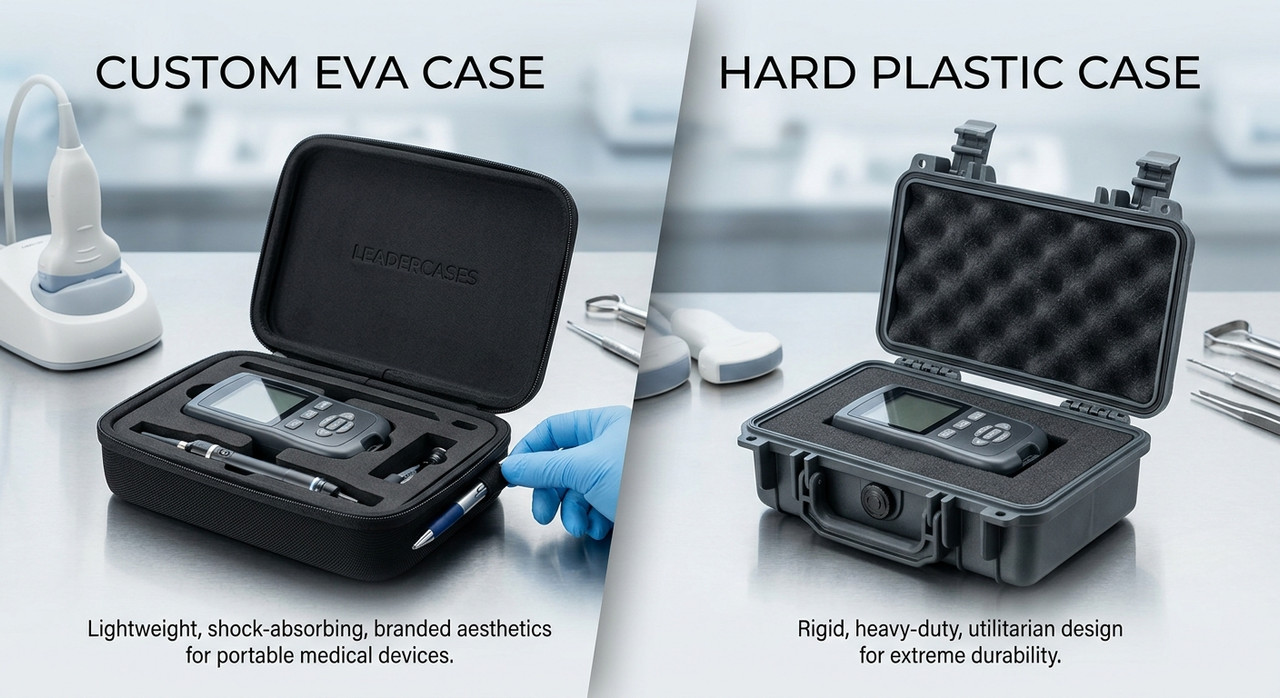
Figure 1: Side-by-side product comparison of a Custom EVA Medical Case and a Hard Plastic Injection Case in a laboratory setting.
For sensitive medical electronics—such as portable ultrasound scanners, diagnostic monitors, blood analyzers, and surgical laser units—understanding material performance under shock and drop forces is vital to product integrity.
Engineering Comparison: EVA Case vs. Hard Plastic Case
To evaluate performance for B2B procurement and medical device packaging design, the table below provides a side-by-side technical comparison across key engineering parameters:
| Engineering Parameter | Custom EVA Shell Case | Hard Plastic Case (Injection Molded) |
|---|---|---|
| Material Composition | Thermoformed EVA foam + 1680D Nylon / PU outer | Injection-molded Polypropylene (PP) or ABS |
| Shell Hardness | Shore Hardness 65C – 75C (Semi-rigid) | Rockwell R100 – R118 / Shore D 75–85 (Rigid) |
| Shock & Impact Cushioning | Excellent elastic energy dissipation; reduced rebound force | Rigid shell transfers impact force directly to internal foam |
| Tooling & Mold Cost | Low ($500 – $1,500) (3D Aluminum / Steel CNC Molds) | High ($3,000 – $10,000+) (High-pressure steel injection tools) |
| Weight Factor | Ultra-lightweight (30%–50% lighter than hard plastic) | Heavy to very heavy |
| Ingress Protection / Waterproofing | Water-resistant (IP54 with TPU waterproof zippers) | Full Waterproof (IP67 with O-ring rubber gasket seal) |
| Internal Cushioning Options | Precision Die-Cut EVA Foam / High-Density IXPE Foam | Pick-and-Pluck Polyurethane or Custom CNC Foam |
| Typical MOQ & Lead Times | MOQ: 200 pcs | Sample: 5–10 Days | Production: 25–30 Days | MOQ: 1,000+ pcs | Tooling: 30–45 Days | Production: 35–45 Days |
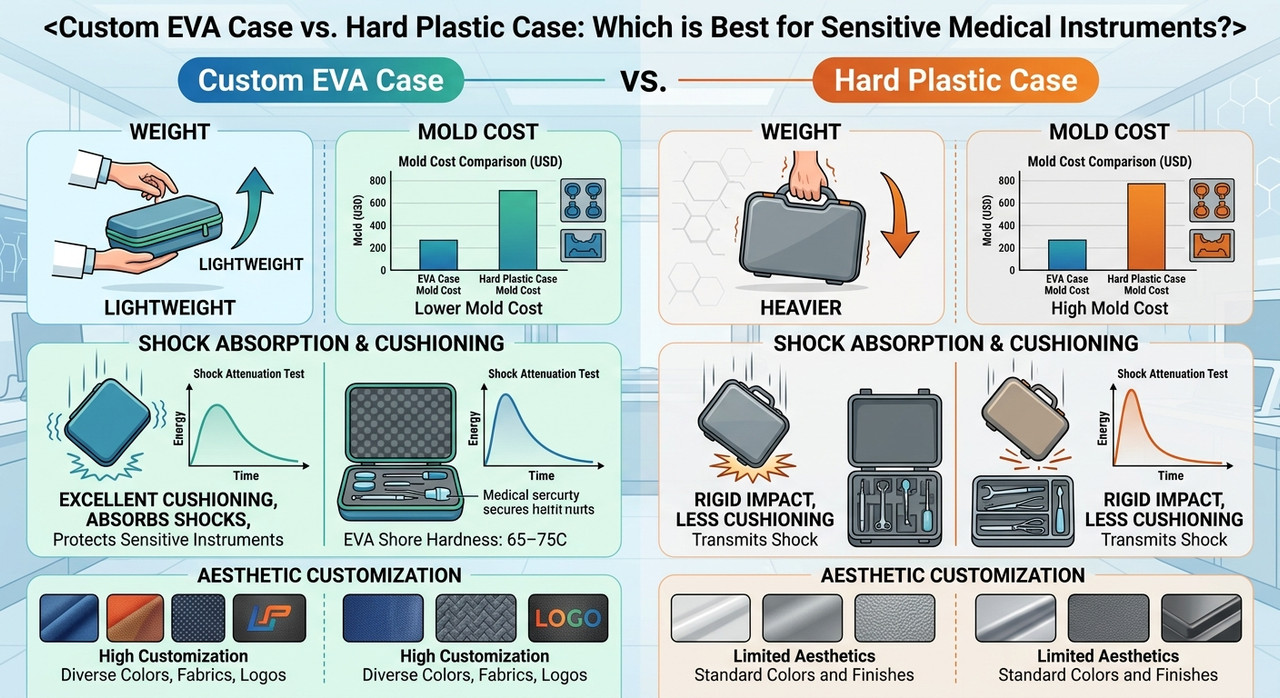
Figure 2: Overview guide comparing Custom EVA Cases and Hard Plastic Cases across weight, tooling cost, shock absorption, and aesthetic customization options.
What is the Ideal EVA Foam Density for Medical Instrument Case Inserts?
The ideal outer EVA shell density ranges from Shore Hardness 65C to 75C, while interior die-cut foam inserts should maintain a density of 30 kg/m³ to 45 kg/m³. This dual-density architecture balances structural perimeter defense with gentle force absorption for delicate calibration components.
Outer Shell Protection (Shore 75C): Provides sufficient flexural stiffness to withstand external compression while maintaining light weight for mobile clinical personnel carrying diagnostic devices.
Precision Die-Cut EVA / IXPE Foam Inserts: Custom CNC or die-cut cavity profiles hold optical lenses, sensors, semen storage tubes, insulin pens, stethoscopes, and probes firmly in place without micro-abrasions.
Drop-Test Performance: In standard 1.2-meter drop tests (MIL-STD-810G protocols), EVA foam cases absorb shock energy through material elastic deformation, significantly reducing G-force transmission to sensitive PCB circuit boards.
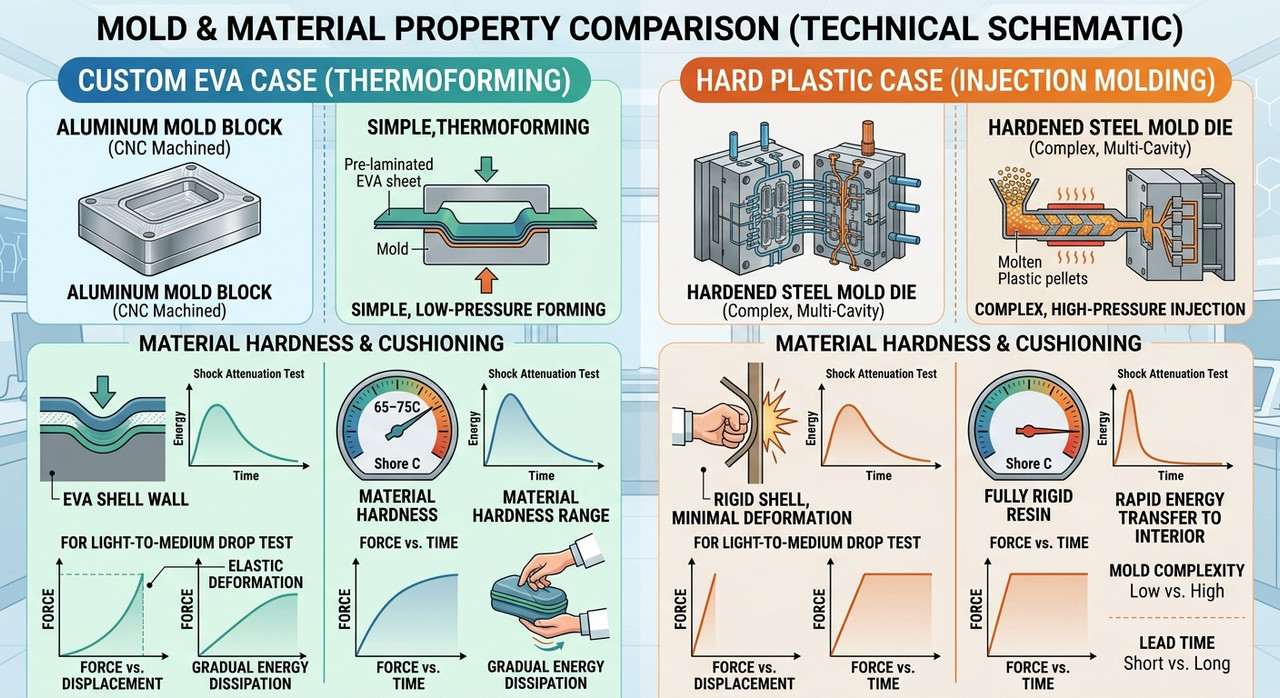
Figure 3: Technical schematic illustrating material hardness ranges (Shore 65–75C) and gradual energy dissipation vs. rigid energy transfer during impact testing.
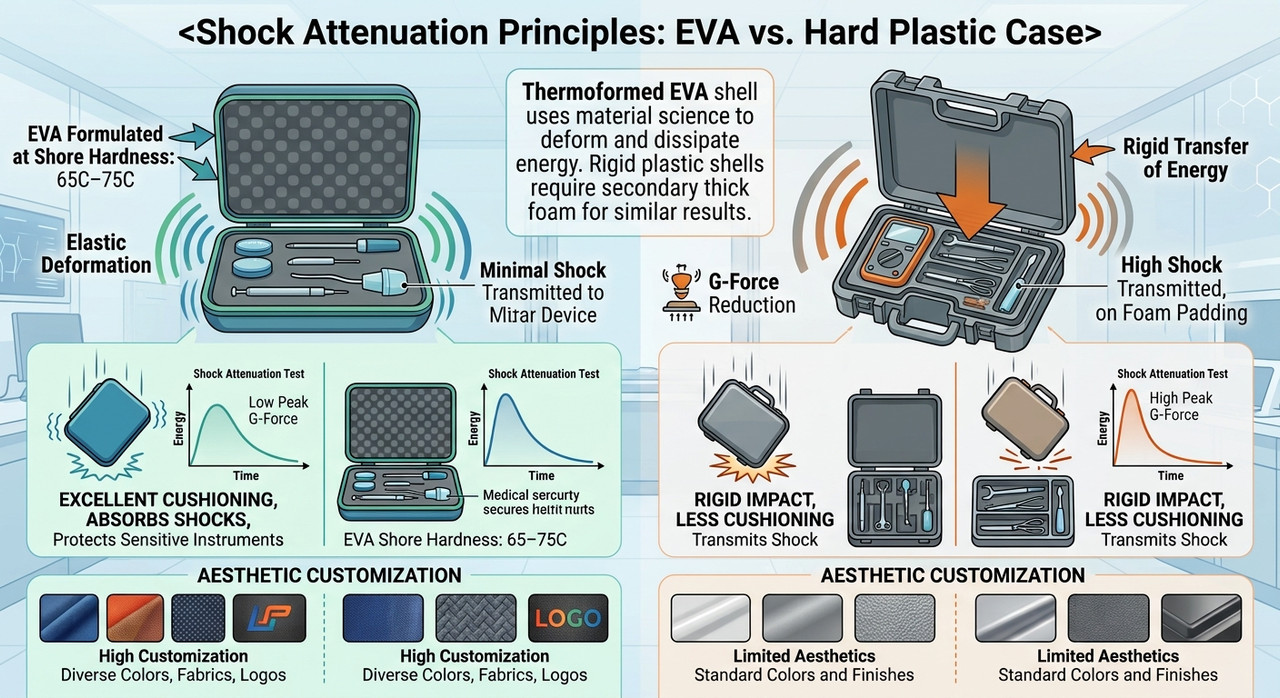
Figure 4: Shock attenuation principles illustrating G-force reduction in thermoformed EVA cases compared to rigid shock transfer in plastic cases, along with custom fabric and logo options.
How Do Mold Tooling Costs and Lead Times Compare for Medical Device Manufacturers?
Custom EVA cases require up to 80% lower tooling investment and significantly faster development timelines than injection-molded hard plastic cases. For B2B buyers bringing new medical equipment to market or running lower initial batch volumes, tooling cost efficiency is paramount.
EVA Case Tooling: 3D CNC aluminum or steel lamination molds typically cost between $500 and $1,500. Prototypes can be generated in 5–10 days, allowing swift FDA / CE packaging verification.
Hard Plastic Tooling: Industrial injection molds require heavy steel tooling costing $3,000 to $10,000+, with mold manufacturing cycles taking 30 to 50 days.
LeaderCases Existing Mold Library: At LeaderCases, medical clients can select from hundreds of existing mold sizes to eliminate upfront tooling costs completely while customizing outer fabrics, branding patches, and internal foam inserts.
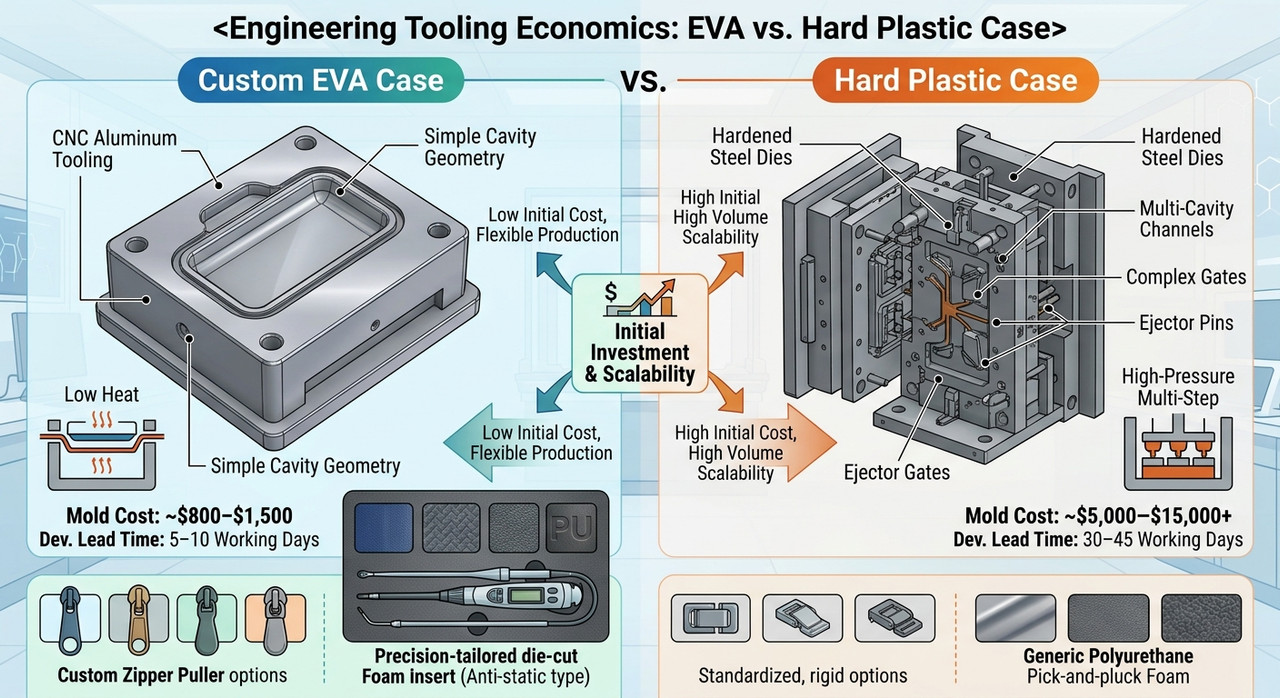
Figure 5: Tooling economics analysis showing low tooling cost and short lead times for custom EVA molds vs. multi-step injection molds.
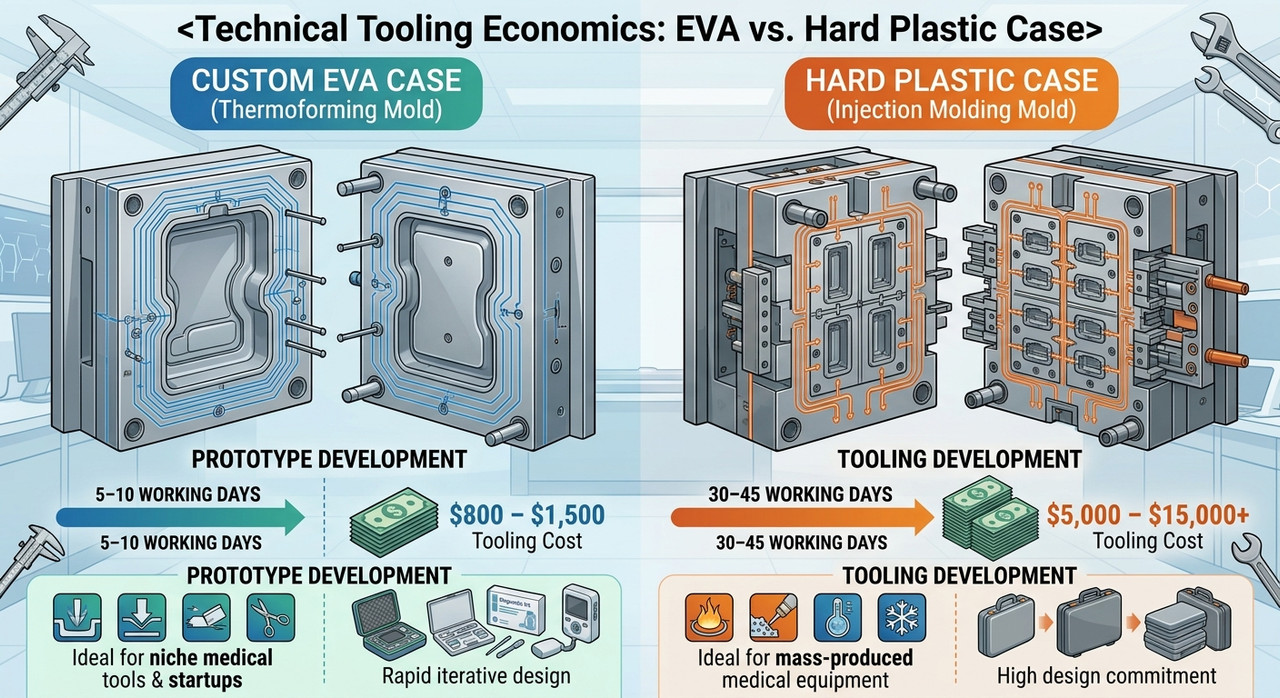
Figure 6: Development timeline and tooling investment comparison for medical device prototype packaging.
Why Work With LeaderCases for Custom Medical Packaging?
As an OEM/ODM direct manufacturer specializing in thermoformed EVA cases and custom protective bags, LeaderCases delivers tailored protective solutions built to strict medical and industrial specifications.
Precision Customization: Full OEM support for 1680D Ballistic Nylon, PU leather exteriors, TPU splash-proof zippers, and customized bio-compatible foam inserts tailored to insulin pens, stethoscopes, semen containers, and blood pressure devices.
Flexible MOQ & Fast Prototyping: Low MOQ starting at 200 pcs for custom runs, with sample lead times within 5 to 10 days.
Direct Factory Engineering Support: Direct technical consultation on shock absorption, drop-test requirements, and mold cost reduction strategies.
Frequently Asked Questions
Q: Can custom EVA cases achieve an IP67 waterproof rating for medical field deployment?
A: Standard custom EVA cases with TPU waterproof zippers typically achieve IP54 to IP55 water and dust resistance, which is sufficient for splash protection during mobile clinical use. For complete IP67 submersion protection, continuous rubber gasket-sealed hard plastic cases remain necessary.
Q: How does EVA case mold cost compare to hard plastic injection mold cost?
A: EVA case thermoforming molds generally cost between $500 and $1,500, whereas injection molds for hard plastic cases range from $3,000 to $10,000+. Choosing an EVA case reduces initial tooling expenditure by 70% to 80%.
Q: What is the standard sample lead time and MOQ for a custom medical EVA case at LeaderCases?
A: LeaderCases offers custom sample creation within 5 to 10 business days. Our minimum order quantity (MOQ) starts at 200 pieces per custom run, with budget-friendly options utilizing our existing mold library.