1680D Nylon vs. PU Leather vs. Oxford Fabric for Cases | LeaderCases
Quick Answer: 1680D Ballistic Nylon provides maximum abrasion resistance, tear strength, and rugged durability for heavy-duty industrial, military, and medical cases. PU Leather offers a premium, liquid-impermeable, and easy-to-clean aesthetic ideal for executive, beauty, and consumer tech packaging. Oxford Fabric (600D/900D) delivers a highly cost-effective, lightweight, and versatile balance of weather resistance and daily protection for high-volume promotional or light-industrial carrying cases.
When designing custom EVA cases, soft bags, or equipment organizers, selecting the right exterior fabric is a critical B2B specification decision. The outer material dictates not only the product's aesthetic appeal and tactile premium feel but also its mechanical lifespan, weatherproofing, drop impact absorption, and bill of materials (BOM) cost.
Among thousands of technical textiles, three materials dominate the protective carrying case industry: 1680D Ballistic Nylon, PU Leather (Polyurethane), and Oxford Fabric (ranging from 300D to 900D). This engineering guide evaluates their performance across key physical parameters, manufacturing considerations, and cost economics to help purchasing managers and product designers make informed decisions.
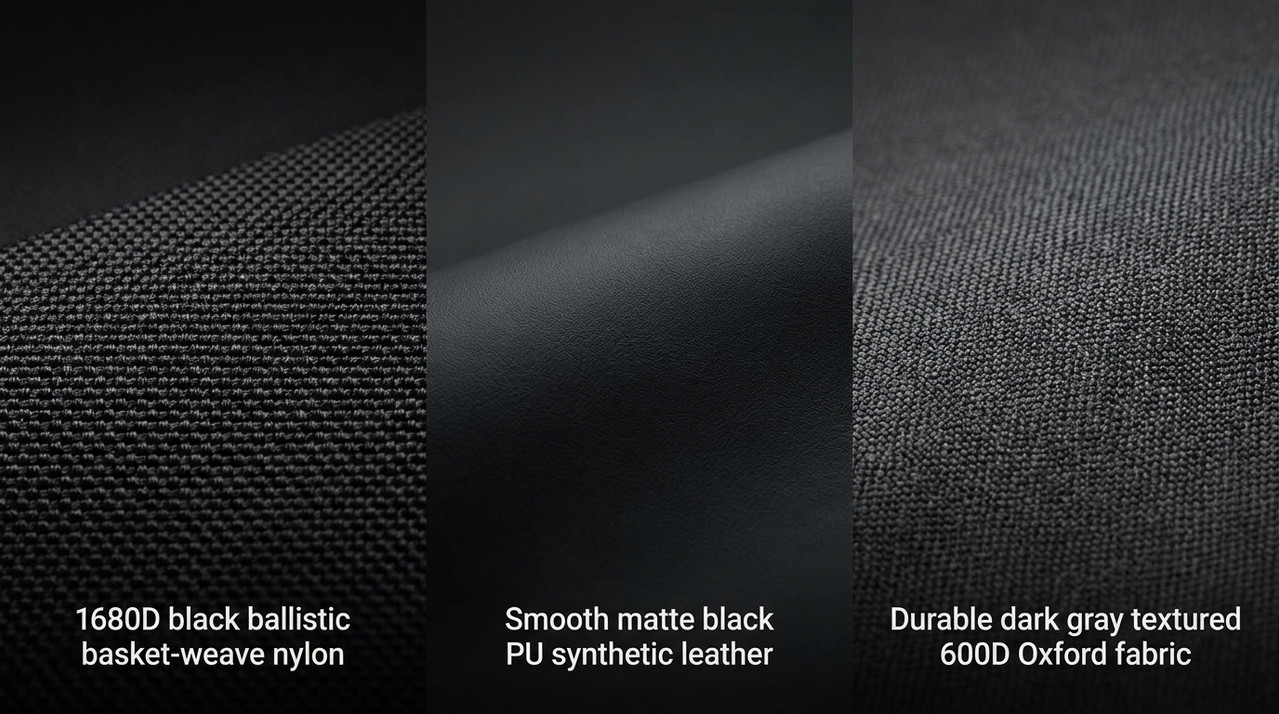
What is the Difference Between 1680D Nylon, PU Leather, and Oxford Fabric?
The fundamental differences lie in polymer construction, weave density, abrasion resistance, and surface finish. 1680D Nylon uses a basket-weave construction of high-tenacity polyamide fibers designed for extreme anti-tear performance. PU Leather applies a synthetic polyurethane layer over a fabric base, creating a seamless, waterproof surface mimicking real leather. Oxford Fabric employs a plain or basket weave (typically polyester or nylon) that prioritizes light weight, color versatility, and cost efficiency.
Material Specification & Comparison Matrix
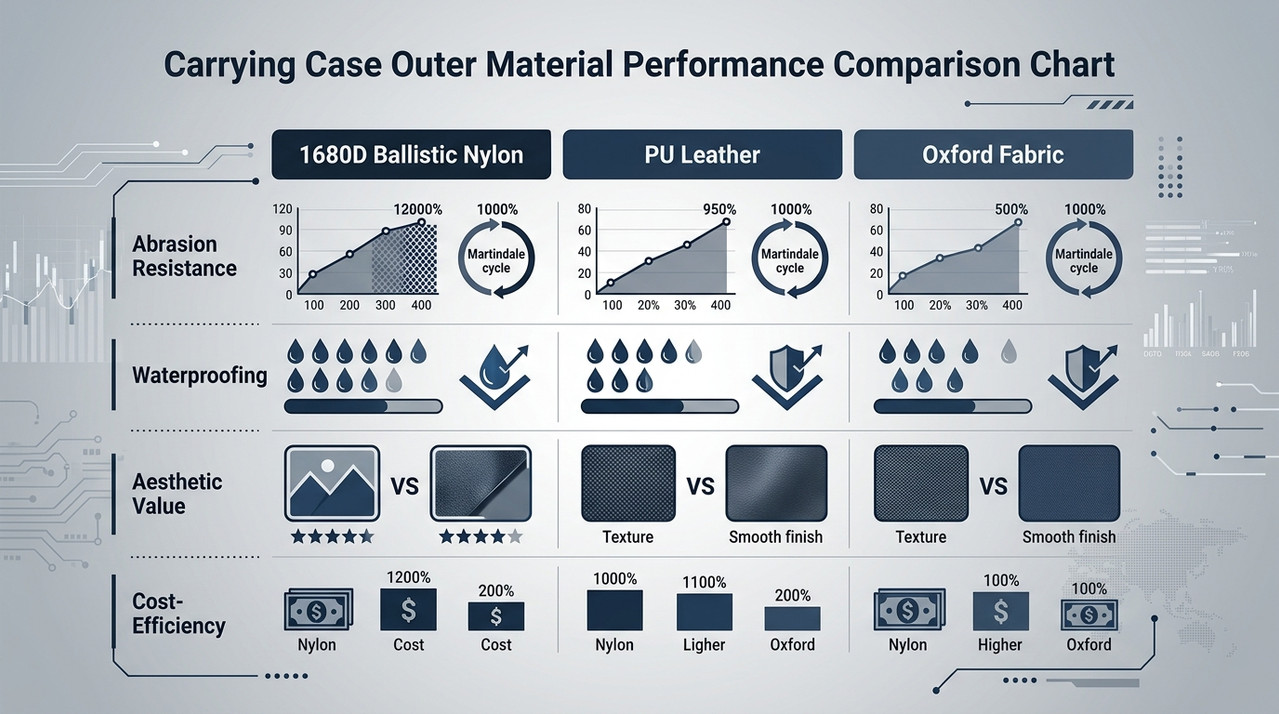
To assist OEM/ODM sourcing teams, the technical comparison table below summarizes the key material parameters and performance standards across all three outer fabric categories:
| Engineering Parameter | 1680D Ballistic Nylon | PU Leather (Polyurethane) | Oxford Fabric (600D / 900D) |
|---|---|---|---|
| Base Polymer & Structure | Polyamide 6,6 (Double-basket weave) | PU Coating on Microfiber / Non-woven base | Polyester (PET) or Nylon (Plain weave) |
| Abrasion Resistance (Martindale Test) | Extreme (> 50,000 cycles) | Moderate to High (15,000 – 30,000 cycles) | Moderate (20,000 – 35,000 cycles) |
| Tensile & Tear Strength | Exceptional (Heavy-duty load bearing) | Moderate (Prone to surface scratching under sharp edge stress) | Good (Dependent on Denier count: 300D to 1680D) |
| Water Resistance Rating | Water-repellent (PU/PVC back coating; IP54 equivalent) | 100% Surface Impermeable (Easy wipe-down) | Water-resistant with PVC/PU backing (Hydrostatic rating > 1500mm) |
| Visual & Tactile Aesthetic | Rugged, matte textured, tactical/industrial look | Executive, smooth, luxury, matte/gloss options | Clean, sporty, uniform weave, highly customizable colors |
| Unit Cost Factor | High (Premium industrial tier) | Medium to High (Depends on texture grade) | Low to Medium (Highest cost-efficiency) |
| Thermoforming Compatibility (EVA) | Excellent (Bonds strongly with EVA foam shell under heat press) | Requires precise heat control (Avoids surface blistering) | Excellent (High bonding adhesion, low scrap rates) |
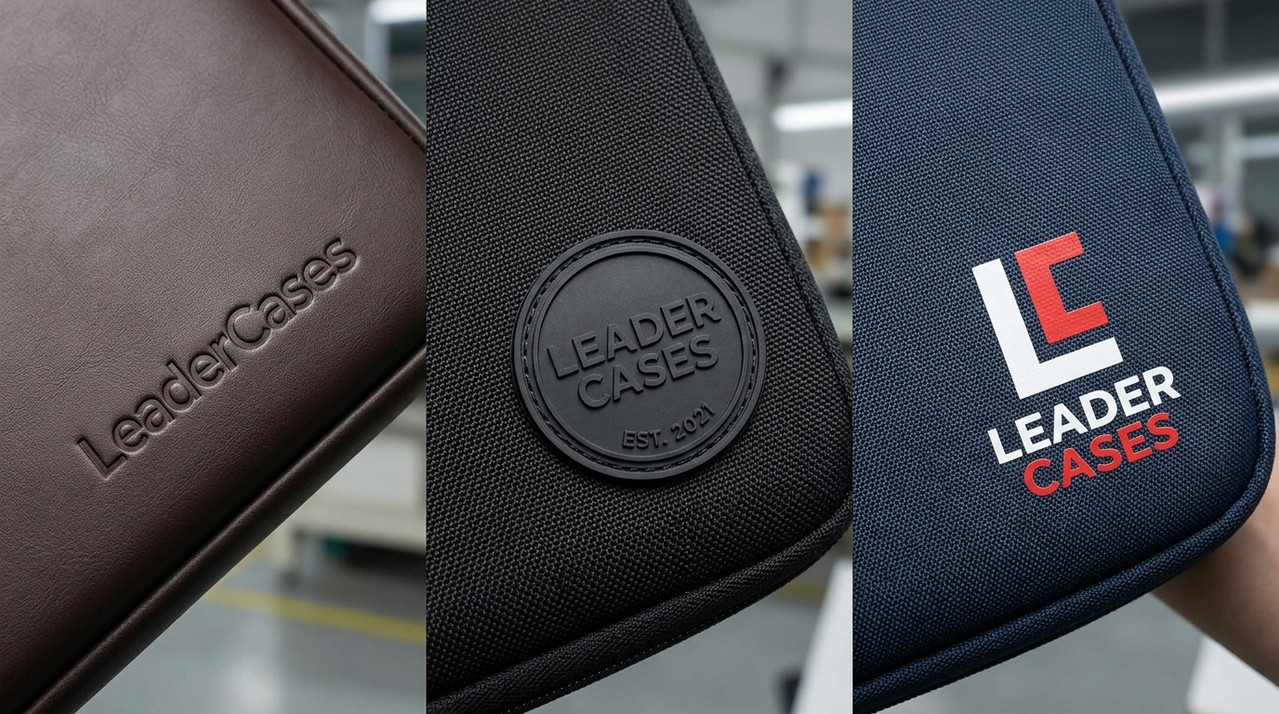
| Customization Options | Rubber patch, embroidery, woven label | Embossing, debossing, hot stamping, silk screen | Silk screen, heat transfer, sublimation print, patches |
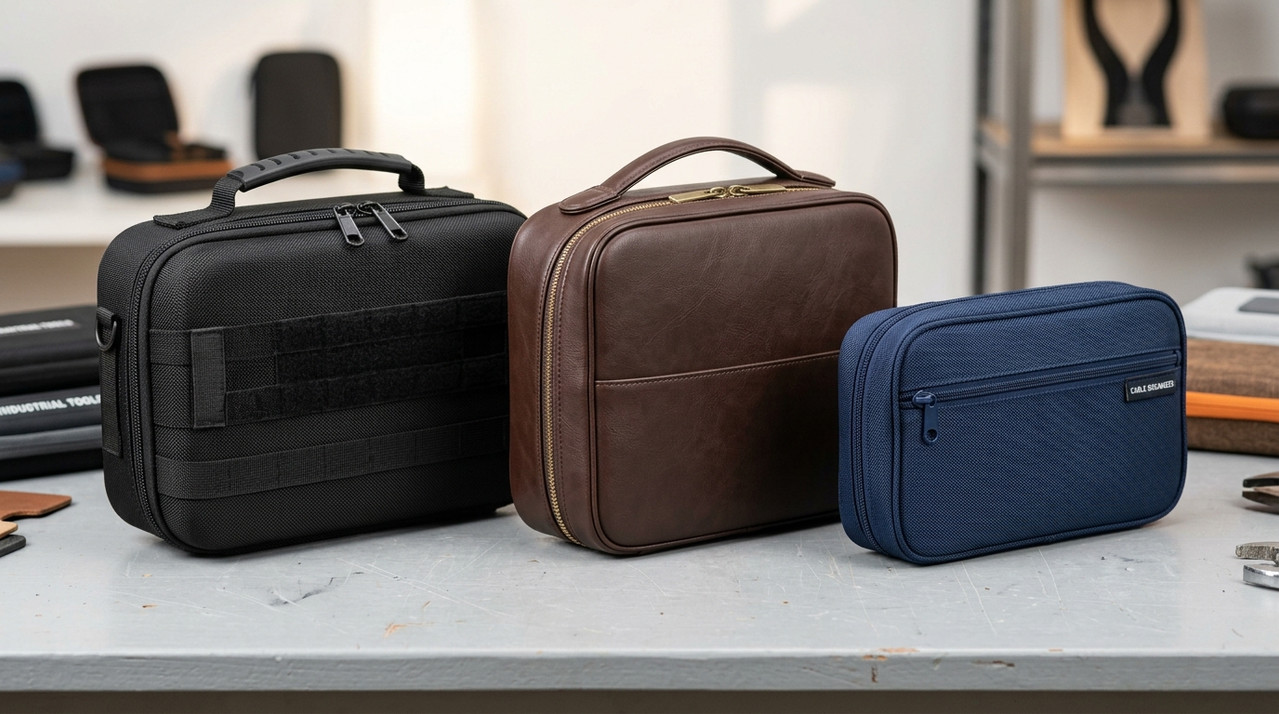
Which Outer Material Should You Choose for Your Custom Case Project?
The choice depends on your product's operating environment, aesthetic positioning, and budget targets. Below is an engineering recommendation based on real-world application scenarios:
1. Choose 1680D Nylon If:
Your case contains heavy or sharp equipment (e.g., medical diagnostic field kits, power tool sets, drone transport cases).
The product must withstand rigorous drop-test standards (e.g., MIL-STD-810G) and long-term friction against harsh outdoor terrain.
You need maximum puncture resistance and professional tactical aesthetics.
2. Choose PU Leather If:
Your product targets executive, luxury, or consumer tech markets (e.g., premium headphone cases, eyewear cases, cosmetics organizers).
Sanitization and fluid wipe-down are paramount (e.g., clinical stethoscopes or personal health devices requiring quick alcohol disinfection).
You desire sophisticated debossed or foil-stamped brand logos on the case surface.
3. Choose Oxford Fabric (600D / 900D) If:
You are aiming for optimal cost-to-performance ratio in mass-market production (e.g., EV charging cable bags, marker storage cases, tech accessories pouches).
You require custom Pantone-matched colors or full-pattern printed outer surfaces.
Light weight and daily wear resistance are sufficient without needing military-grade ballistic nylon.
How Does Outer Fabric Selection Impact Custom Manufacturing Workflows?
Outer fabric selection directly affects heat-compression molding parameters, glue lamination adhesion, and sample lead times. At LeaderCases, our engineering team optimizes heat-press temperature and mold dwelling times based on the chosen outer fabric:
Lamination Heat Control: PU Leather requires lower thermoforming temperatures (around 120°C–140°C) to prevent surface discoloration or polymer blistering, whereas 1680D Nylon tolerates higher bonding temperatures (150°C–170°C) for maximum foam adhesion.
Tooling & Sample Lead Times: Standard Oxford and 1680D Nylon fabrics are regularly stocked in our material warehouse, enabling rapid sample turnarounds in 5 to 10 days. Custom texture PU Leathers or specific Pantone dyes require a raw material lead time of 7–12 days prior to sample assembly.
MOQ Economics: Standard fabric colors (Black, Dark Gray, Navy Blue) carry low MOQ thresholds starting at 200 pcs per custom order, making prototyping and low-volume pilot runs cost-effective.
Frequently Asked Questions
Q: Is 1680D Nylon completely waterproof when used on an EVA case?
A: 1680D Nylon itself is highly water-repellent when laminated with an inner PU or PVC coating. When paired with TPU splash-proof zippers, the complete case achieves IP54-level weather resistance against rain and splashes.
Q: How does the cost of PU leather compare to 1680D Nylon for carrying cases?
A: High-grade micro-fiber PU Leather and 1680D Ballistic Nylon reside in a similar premium price tier, costing roughly 30% to 50% more than standard 600D Oxford fabric. Final unit pricing depends heavily on custom surface textures and order volumes.
Q: What is the standard sample lead time and MOQ for custom fabric EVA cases at LeaderCases?
A: LeaderCases delivers custom prototypes within 5 to 10 business days. Our minimum order quantity (MOQ) starts at 200 pieces per custom run, with existing mold library access available to eliminate upfront tooling costs.